SAT Mastery Series: Reading Deep Dive – Vocabulary in Context (Module 14)
![[HERO] SAT Mastery Series: Reading Deep Dive – Vocabulary in Context (Module 14)](https://cdn.marblism.com/TXEMClvwEzV.webp)
You know that sinking feeling when you're cruising through an SAT reading passage, feeling pretty good about yourself, and then BAM, a "most nearly means" question trips you up? You pick the word that sounds the smartest, the most sophisticated, the one that would make your English teacher proud. And then you check your answer. Wrong.
Here's the brutal truth: the SAT loves to punish students who try to sound smart. Those vocabulary-in-context questions aren't testing whether you know fancy synonyms. They're testing whether you can slow down, read carefully, and understand what the author is actually trying to say.
Welcome to Module 14, where we're going to flip your entire approach to these questions upside down.
Why "Most Nearly Means" Questions Are Low-Key Evil
The College Board is sneaky. They don't ask you to define "pulchritudinous" or "obfuscate." Instead, they take everyday words like "appreciate," "support," or "qualify" and use them in ways you've probably never seen before.
For example, an author might write that a scientist's theory "qualified her earlier findings." You see the word "qualified" and think, Oh, she became qualified! She got certified! Nope. In this context, "qualified" means "limited" or "placed restrictions on." See how that works?
The trap is always the same: The answer choices include one word that sounds sophisticated or impressive but doesn't actually fit the passage's meaning. It's bait. And students bite every single time.
The Substitution Method: Your New Best Friend
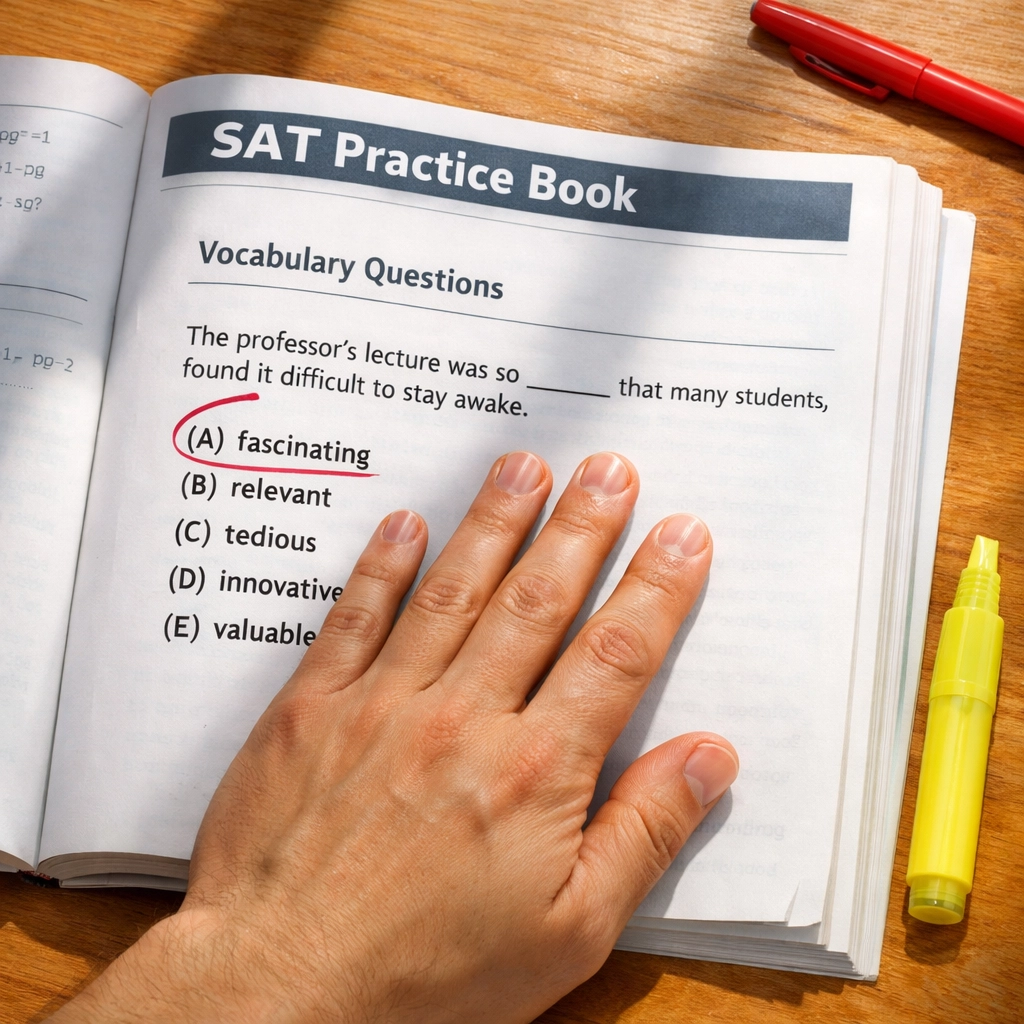
Here's the strategy that's going to save you points: Find your own synonym BEFORE you look at the answer choices.
Seriously. Cover up those answer choices with your hand. Read the sentence with the vocabulary word. Based on context clues alone, what simpler word or phrase could you drop in there?
Let's walk through it:
Step 1: Find the sentence with the target word.
Step 2: Read one sentence before and one sentence after for full context.
Step 3: Cover the answer choices (yes, physically cover them).
Step 4: Ask yourself: "What's a simpler word that would make sense here?"
Step 5: Write down your word.
Step 6: NOW look at the answer choices and find the one closest to YOUR word.
This method forces you to think about meaning first, fancy vocabulary second. It's a game-changer.
Practice Time: Let's Break Down Real Examples
Here's where we spend the bulk of our time. I'm going to give you SAT-style excerpts and walk you through exactly how a tutor would guide a student through the elimination process.
Example 1: "Appreciate"
Passage Excerpt:
"The new safety regulations didn't just improve workplace conditions, they fundamentally changed how employees appreciated the risks inherent in their daily tasks."
Question: As used in the passage, "appreciated" most nearly means:
A) Valued
B) Understood
C) Enjoyed
D) Thanked
Tutor Script:
Okay, let's use the Substitution Method. Cover those answers. Now, reread the sentence. The regulations changed how employees did what with the risks? They changed how employees __________ the risks.
Try substituting "valued." Does it make sense to say the regulations changed how employees valued the risks? Not really. The passage isn't about whether workers thought risks were important, it's about their awareness or comprehension of those risks.
Try "understood." The regulations changed how employees understood the risks. That fits perfectly! The sentence is saying they now comprehend or recognize the dangers better than before.
Why the others fail:
- A) Valued – Too focused on worth or importance, not comprehension.
- C) Enjoyed – Ridiculous. You don't "enjoy" risks in a workplace context.
- D) Thanked – This doesn't even make grammatical sense here.
Answer: B) Understood
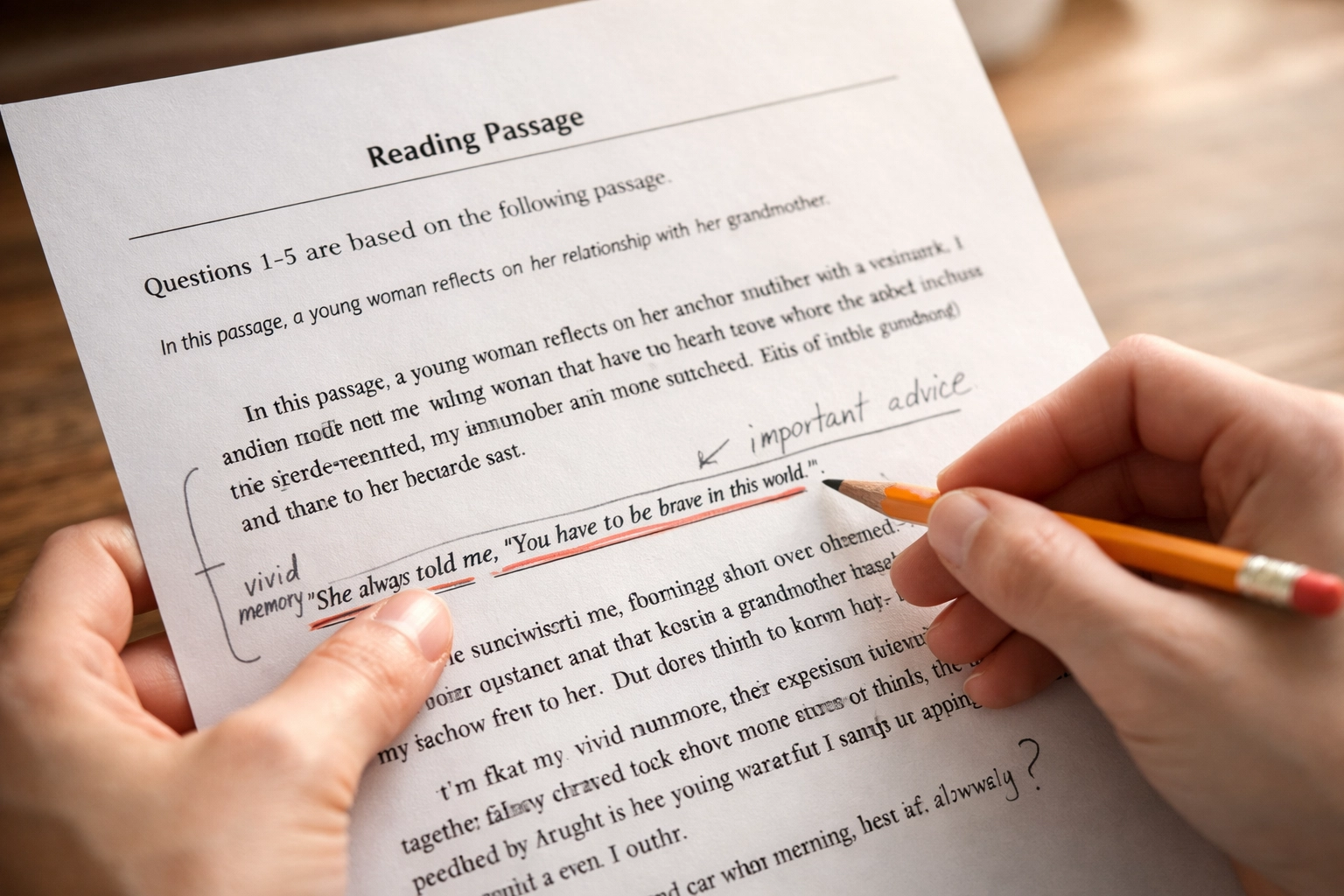
Example 2: "Support"
Passage Excerpt:
"While the fossil record supports the existence of early mammalian species in this region, it cannot support the claim that these creatures migrated from distant continents."
Question: The second use of "support" most nearly means:
A) Hold up
B) Confirm
C) Encourage
D) Assist
Tutor Script:
Notice the passage uses "support" twice in different ways. That's a classic SAT move. We're focused on the second use, "cannot support the claim."
Cover your answers. What does it mean when evidence "cannot support" a claim? It means it can't __________ the claim. Try "prove" or "back up" or "confirm."
Now look at your choices. B) Confirm is the closest match. The fossil evidence cannot confirm or verify the migration claim.
Why the others fail:
- A) Hold up – This is the literal, physical meaning of support. The fossil record isn't physically holding anything.
- C) Encourage – The fossil record doesn't have feelings. It's not cheering anyone on.
- D) Assist – Too vague. "Assist" doesn't capture the idea of providing evidence for a claim.
Answer: B) Confirm
Example 3: "Pedestrian"
Passage Excerpt:
"Critics dismissed the novel as pedestrian, arguing that the author's latest work lacked the innovative storytelling that defined her earlier books."
Question: As used in the passage, "pedestrian" most nearly means:
A) Walking
B) Ordinary
C) Slow-moving
D) Accessible
Tutor Script:
Cover those answers. What are the critics saying about the novel? They're saying it's __________ because it lacks innovation. What's the opposite of innovative? Common. Ordinary. Unremarkable.
Your substitution word might be "boring" or "unoriginal." Now look at your choices. B) Ordinary is the perfect match.
Why the others fail:
- A) Walking – That's the literal definition, but we're not talking about someone on foot.
- C) Slow-moving – This could describe a boring plot, but "pedestrian" in this context means commonplace, not pace.
- D) Accessible – This is a trap! "Accessible" sounds like a positive literary term, but the passage is criticizing the book, not praising it.
Answer: B) Ordinary

Example 4: "Economy"
Passage Excerpt:
"The architect's design was praised for its economy of space, fitting multiple functional areas into a compact footprint without sacrificing comfort."
Question: As used in the passage, "economy" most nearly means:
A) Financial system
B) Efficiency
C) Affordability
D) Simplicity
Tutor Script:
Cover up. The design was praised for its economy of space. What does that mean? It means the architect used space __________ or __________.
You might think "wisely" or "carefully" or "efficiently." The design doesn't waste any space: it uses it smartly.
B) Efficiency nails it. The architect maximized the use of space.
Why the others fail:
- A) Financial system – That's economy in the macro sense. Not relevant here.
- C) Affordability – The passage isn't talking about cost at all.
- D) Simplicity – Close, but not quite. "Economy" here emphasizes smart use, not just minimalism.
Answer: B) Efficiency
Example 5: "Entertaining"
Passage Excerpt:
"The scientist refused to entertain the hypothesis that the data was flawed, insisting instead that her methodology was sound."
Question: As used in the passage, "entertain" most nearly means:
A) Amuse
B) Consider
C) Host
D) Distract
Tutor Script:
Quick substitution. The scientist refused to __________ the hypothesis. She wouldn't __________ the idea that the data was flawed.
What fits? "Consider." She wouldn't consider or think about the possibility.
B) Consider is your answer.
Why the others fail:
- A) Amuse – The scientist isn't trying to be funny.
- C) Host – You host people, not ideas.
- D) Distract – Doesn't make sense in this context.
Answer: B) Consider
The Pattern You Need to See
Notice something about all these examples? The "trap" answer is always the word that sounds impressive or uses the most common definition of the vocabulary word. The College Board is counting on you to panic, scan the answers quickly, and grab the first thing that looks right.
The winning move: Slow down. Trust the Substitution Method. Find your own word first.
Your Action Plan for Test Day
Here's your game plan when you see a "most nearly means" question:
- Read the full sentence and one sentence on either side for context.
- Cover the answer choices so they don't influence your thinking.
- Come up with your own simple substitute word based on context clues.
- Compare your word to the choices and pick the closest match.
- Eliminate obviously wrong answers that use the literal or most common definition.
This isn't about having a massive vocabulary. It's about reading carefully and thinking critically. That's what the SAT is really testing.
Ready to Level Up Your SAT Game?
You've just learned the single most powerful strategy for vocabulary-in-context questions. But here's the truth: reading this article isn't the same as practicing the method yourself.
Want personalized coaching to master not just vocabulary questions, but every section of the SAT? Our tutors at Light University use these exact strategies to help students break through score plateaus and hit their target numbers.
Check out our other SAT Mastery Series modules and see how we're helping students turn test anxiety into test confidence. You've got this.