SAT Mastery Series: Reading Deep Dive – Science & Data Graphics (Module 9)
![[HERO] SAT Mastery Series: Reading Deep Dive – Science & Data Graphics (Module 9)](https://cdn.marblism.com/lj6p5v6l6oi.webp)
Picture this: You're cruising through the SAT Reading section, feeling pretty good about yourself. Then you hit a science passage, and boom, there's a graph with two y-axes, a legend you can barely read, and a question asking you to "identify which statement is most strongly supported by the data presented in Figure 1."
Your heart sinks. Do I read the passage first? The graph? Both at once?
You're not alone. Data graphics questions trip up more students than almost any other question type on the SAT Reading Test. But here's the good news: once you know the system, these questions become some of the easiest points you'll score all day.
Welcome to Module 9, where we're breaking down exactly how to master SAT science passages with data graphics, graphs, tables, charts, and all those visual tricks the test loves to throw at you.
Understanding the Beast: How SAT Science Passages Use Data
First, let's get one thing straight: the SAT isn't testing whether you're a future scientist. It's testing whether you can read data accurately and connect it to written claims.
Every science passage with a graphic follows a predictable pattern:
- The passage makes a claim (e.g., "Researchers found that ocean temperatures increased significantly between 1990 and 2010")
- The graphic shows you the evidence (a line graph with temperature data)
- The question asks you to verify whether the data supports, contradicts, or extends the passage's claim
The key insight? The SAT wants you to be a fact-checker, not a scientist. Your job is simple: match what the author says with what the data shows.

Decoding Graph Anatomy
Before we dive into strategy, you need to speak "graph language." Here's your quick reference guide:
X-axis (horizontal): Usually represents time or categories
Y-axis (vertical): Usually represents the measured quantity
Legend: Shows what different lines, colors, or patterns represent
Title: Tells you exactly what you're looking at, read this first, always
Data points: The actual evidence you'll reference in your answer
Pro tip: On the digital SAT, you can zoom in on graphics. Use this feature! Don't squint at tiny text when you can make it bigger.
Strategy: The "Data First" Approach
Here's where most students mess up: they read the entire passage, then look at the question, then finally check the graph. By that point, they're confused, pressed for time, and second-guessing themselves.
Flip the script. Here's the winning sequence:
- Read the question first to know what you're looking for
- Examine the graphic and understand its components (title, axes, legend)
- Find the specific data point the question references
- Skim the passage only for context if needed
- Eliminate answers that contradict the data
Why does this work? Because data graphics questions are visual-based. The answer is literally right there in the chart. The passage just provides background noise.
Your new mantra: "Trust the visual, verify with the text."

Practice: Where Rubber Meets Road
Alright, let's get to work. Below are SAT-style practice questions involving data graphics. We're going heavy on explanations because understanding why an answer is correct matters more than memorizing tricks.
Practice Question 1: Line Graph Interpretation
Passage excerpt:
"Between 2000 and 2020, global carbon dioxide emissions rose steadily, with particularly sharp increases observed after 2010."
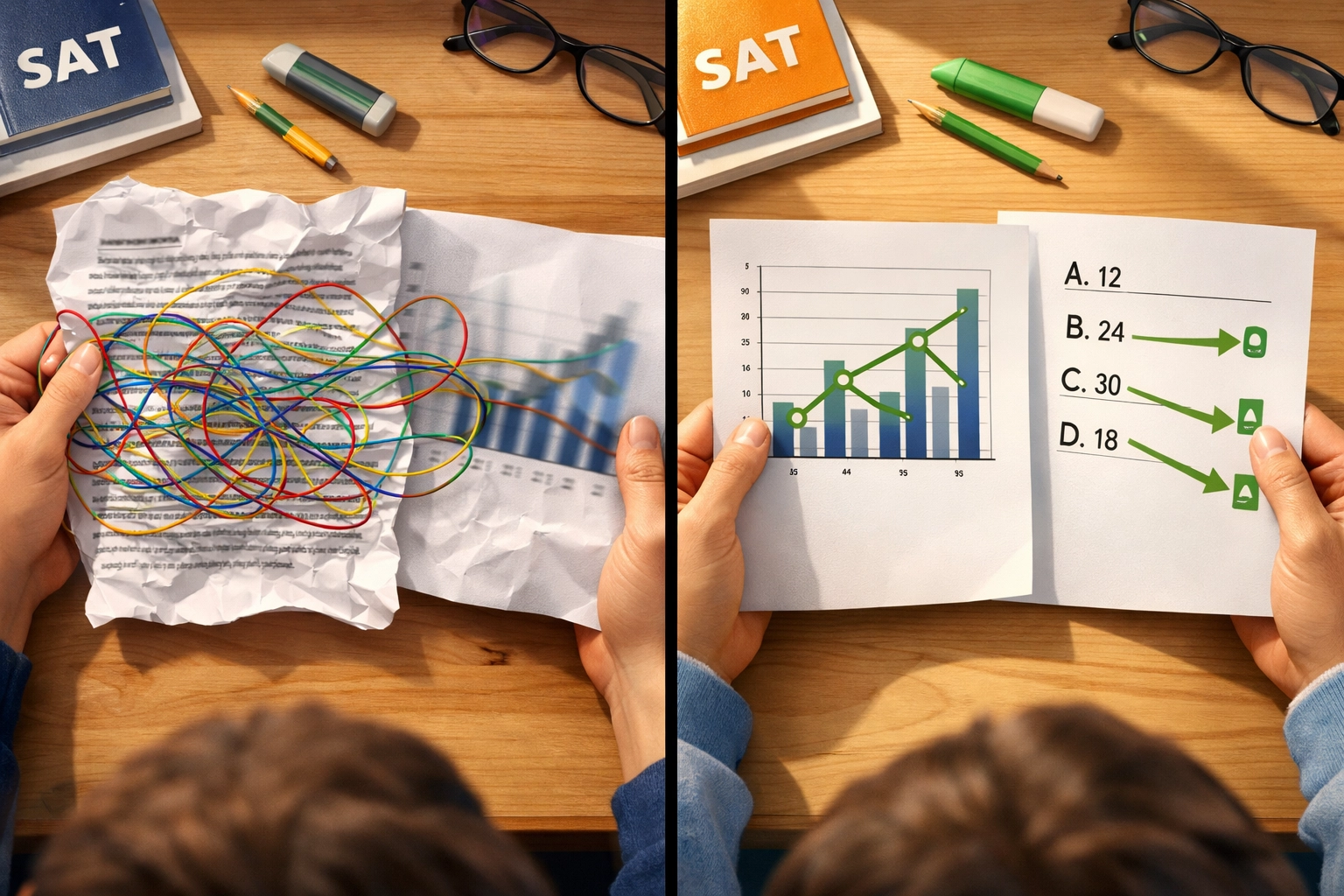
Figure 1: Global CO₂ Emissions (2000-2020)
(Imagine a line graph showing emissions rising from 25 billion tons in 2000 to 35 billion tons in 2020, with a steeper slope after 2010)
Question:
Which statement is most strongly supported by the data in Figure 1?
A) Carbon dioxide emissions decreased between 2010 and 2015.
B) The rate of emission increase accelerated after 2010.
C) Emissions remained constant throughout the 2000-2020 period.
D) The highest emissions occurred in 2005.
Step-by-Step Breakdown:
First, what's the question asking? Whether the data supports a specific claim. So we need to look at the graph and verify what actually happened.
Check the x-axis: Time (2000-2020)
Check the y-axis: CO₂ emissions in billions of tons
Check the trend: The line goes up throughout, that's our first clue
Now let's eliminate:
Choice A: Says emissions decreased between 2010-2015. Look at the graph during those years, the line goes up, not down. Eliminated.
Choice C: Says emissions stayed constant. The line clearly slopes upward the entire time. Eliminated.
Choice D: Claims highest emissions were in 2005. But the line keeps going up until 2020, so 2020 has the highest emissions. Eliminated.
Choice B: Says the rate increased (got steeper) after 2010. Look at the slope, it's gentler from 2000-2010, then gets noticeably steeper from 2010-2020. This matches!
Answer: B
Tutor Script Moment: Ask your student: "What does a steeper line on a graph mean?" (Faster change.) "So if the line gets steeper after 2010, what does that tell us about emissions?" (They increased faster.)
Practice Question 2: Table Data & Percentages
Passage excerpt:
"The study found that Plant Species A showed greater drought resistance than Plant Species B across all temperature conditions tested."
Table 1: Survival Rates Under Drought Conditions
| Temperature | Species A | Species B |
|---|---|---|
| 20°C | 85% | 78% |
| 25°C | 72% | 65% |
| 30°C | 64% | 52% |
Question:
Based on Table 1, which statement about the plants is accurate?
A) Species B had higher survival rates at all temperatures.
B) Species A's survival rate increased as temperature rose.
C) At 30°C, Species A survived at a higher rate than Species B at any temperature.
D) Species A consistently showed greater drought resistance than Species B.
Step-by-Step Breakdown:
This is a classic "verify the claim" question. The passage says Species A had greater resistance (higher survival) across all temperatures. Let's fact-check.
Choice A: Says Species B had higher rates. Look at every row, Species A has higher percentages in all three rows (85 vs 78, 72 vs 65, 64 vs 52). This is backwards. Eliminated.
Choice B: Says Species A's rate increased with temperature. But look at Species A's column: 85% → 72% → 64%. That's going down, not up. Eliminated.
Choice C: This is sneaky. It says Species A at 30°C (64%) did better than Species B at any temperature. But Species B hit 78% at 20°C, which beats 64%. Eliminated.
Choice D: Says Species A consistently showed greater resistance. Compare each row: Species A wins every time. This directly matches the passage claim and the data.
Answer: D
Tutor Script Moment: Have your student circle the numbers in each row and compare them side-by-side. "Which column wins in row 1? Row 2? Row 3?" Make it visual and repetitive.
Practice Question 3: Bar Graph with Multiple Variables
Passage excerpt:
"Researchers observed that caffeine consumption improved test performance only in participants who slept 7+ hours the night before."
Figure 2: Test Performance by Caffeine Intake and Sleep Duration
(Imagine a grouped bar graph with two groups: "Less than 7 hours sleep" and "7+ hours sleep," each showing performance scores with/without caffeine)
Question:
According to Figure 2, which conclusion is supported?
A) Caffeine improved performance for both sleep groups equally.
B) Participants with less sleep performed better without caffeine.
C) Caffeine had a larger positive effect on the well-rested group.
D) Sleep duration had no impact on test performance.
Step-by-Step Breakdown:
Data First approach: Find the two groups. Within each group, compare the "caffeine" vs "no caffeine" bars.
For the "Less than 7 hours" group:
- Without caffeine: 65 points
- With caffeine: 68 points
- Difference: +3 points
For the "7+ hours" group:
- Without caffeine: 75 points
- With caffeine: 88 points
- Difference: +13 points
Now evaluate:
Choice A: Says the effect was equal for both groups. But we just calculated +3 vs +13, not equal. Eliminated.
Choice B: Says the less-rested group did better without caffeine. That's backwards, 68 is higher than 65. Eliminated.
Choice D: Says sleep duration had no impact. But the 7+ hours group scored higher overall (75 vs 65 baseline). Sleep clearly mattered. Eliminated.
Choice C: Says caffeine had a larger positive effect on the well-rested group. The math confirms it: +13 points vs +3 points. That's what "larger effect" means.
Answer: C
Tutor Script Moment: "Let's do some quick subtraction. What's 68 minus 65? What's 88 minus 75? Which difference is bigger? That's your answer."
Practice Question 4: Scatter Plot Analysis
Passage excerpt:
"The data revealed a strong positive correlation between hours of study and exam scores, though several outliers were observed."
Figure 3: Study Hours vs Exam Scores
(Imagine a scatter plot with most points trending upward, but 2-3 points way off the trend line)
Question:
Based on Figure 3, what can be reasonably concluded?
A) Every student who studied more scored higher.
B) The general trend shows increased study time correlates with higher scores.
C) Study time has no relationship to exam performance.
D) Most students studied fewer than 5 hours.
Step-by-Step Breakdown:
With scatter plots, look for the overall pattern, not individual points.
Choice A: Uses the word "every." That's an absolute. If even one student studied 10 hours and scored low (an outlier), this fails. Scatter plots rarely support absolutes. Eliminated.
Choice C: Says no relationship. But if the passage mentions "positive correlation" and the dots generally trend upward, there's clearly a relationship. Eliminated.
Choice D: Makes a claim about the x-axis data distribution. You'd need to count dots and see where they cluster, this isn't about correlation, it's about data distribution. Not what the question asks. Eliminated.
Choice B: Says the general trend shows correlation despite outliers. This matches what scatter plots do, they show overall patterns while allowing for exceptions.
Answer: B
Tutor Script Moment: "Cover those weird outlier dots with your finger. What direction do the remaining dots go? Up and to the right? That's positive correlation."
Practice Question 5: Double Y-Axis Trap
Passage excerpt:
"As online shopping increased between 2015 and 2020, traditional retail store visits declined."
Figure 4: Online Shopping Growth & Retail Store Traffic (2015-2020)
(Imagine a graph with two y-axes: left axis for online purchases in millions, right axis for store visits in billions)
Question:
Which statement is supported by Figure 4?
A) Online purchases and store visits both increased at the same rate.
B) In 2018, online purchases surpassed store visits.
C) The trends moved in opposite directions over the period.
D) Store visits remained constant throughout.
Step-by-Step Breakdown:
This is where students panic. Two y-axes? Different units? Stay calm and work systematically.
First: Identify which line uses which axis. Usually, the left y-axis goes with one line color, the right with another.
Second: Look at each line's direction independently.
- Online purchases (left axis): going UP
- Store visits (right axis): going DOWN
Choice A: Says both increased at the same rate. But one went up, one went down. Eliminated.
Choice B: This is the trap. It says "online purchases surpassed store visits" in 2018. But you can't directly compare them, they use different scales! One's in millions, one's in billions. You can't say 500 million is more than 2 billion just because the line is higher on the graph. Eliminated.
Choice D: Says store visits stayed constant. But the line slopes downward. Eliminated.
Choice C: Says trends moved in opposite directions. One up, one down. That's exactly what we see, and we don't need to compare actual numbers, just directions.
Answer: C
Tutor Script Moment: "Can we compare apples and oranges? No. Can we say one pile of apples is shrinking while oranges are growing? Yes. Focus on direction, not magnitude, when axes differ."
Practice Question 6: Reading the Legend
Passage excerpt:
"Both vaccine groups showed improved immunity, though the mRNA vaccine produced higher antibody levels than the protein-based vaccine."
Figure 5: Antibody Levels Over Time by Vaccine Type
(Line graph with two lines: solid line = mRNA vaccine, dashed line = protein vaccine)
Question:
According to the legend and Figure 5, which is accurate?
A) The dashed line represents mRNA vaccine data.
B) Antibody levels declined for both vaccines after 60 days.
C) The mRNA vaccine (solid line) showed consistently higher levels.
D) The protein vaccine produced higher peak antibody levels.
Step-by-Step Breakdown:
Always, always check the legend before answering. Graph literacy means knowing what you're looking at.
The legend says:
- Solid line = mRNA vaccine
- Dashed line = Protein vaccine
Now trace each line and compare:
Choice A: Says dashed = mRNA. But the legend says dashed = protein. Eliminated immediately if you read the legend.
Choice B: Says both declined after 60 days. You'd need to see both lines going downward after that point. Unless that's shown, we can't assume it. Likely eliminated.
Choice D: Says protein (dashed) had a higher peak. But if the passage claims mRNA showed "higher antibody levels," the solid line should be above the dashed line. Contradicts the passage. Eliminated.
Choice C: Says mRNA (solid) was consistently higher. If the solid line stays above the dashed line throughout the time period, this matches both the passage claim and the visual data.
Answer: C
Tutor Script Moment: "Before we even read the question, let's write down what each line means. Solid = what? Dashed = what? Now we won't get tricked."
Your Data Graphics Checklist
Before you move to the next passage, ask yourself:
✅ Did I read the title and legend?
✅ Do I understand what each axis represents?
✅ Did I look at the visual before diving into answer choices?
✅ Can I point to the specific data that supports my answer?
✅ Did I watch out for trap answers that sound good but contradict the data?
Master these, and data graphics questions transform from stress-inducing nightmares into your favorite freebies.
Ready to level up your SAT Reading skills even more? Check out our full collection of SAT modules and build a personalized study plan that turns test anxiety into test confidence.
You've got this. 🚀