The High Schooler's Guide to Building a Digital SAT Study Plan in 2026
![[HERO] The High Schooler's Guide to Building a Digital SAT Study Plan in 2026](https://cdn.marblism.com/-Bmygcpj9Gt.webp)
Let's be real for a second. The SAT can feel like this massive, intimidating mountain standing between you and your dream college. You've probably heard a million different opinions about how to study, which prep books to buy, and when to even take the test.
It's overwhelming. And you're not alone in feeling that way.
But here's the truth: conquering the Digital SAT in 2026 isn't about studying harder, it's about studying smarter. With the right sat study plan, you can walk into test day feeling confident, prepared, and ready to crush it.
Let's build that plan together.
Why a Structured SAT Study Plan Changes Everything
Think about it this way: would you run a marathon without training? Probably not. The SAT is the same. Random studying here and there won't get you where you want to go.
A solid study plan does three powerful things:
- Eliminates the guesswork , You know exactly what to do each week
- Builds momentum , Small wins add up to big score jumps
- Protects your sanity , No more last-minute cramming or burnout
The students who see the biggest score improvements aren't necessarily the "smartest" ones. They're the ones with a clear roadmap and the discipline to follow it.
That's what we're creating today.

Understanding the 2026 Digital SAT
If you haven't heard, the SAT is fully digital now. This isn't your older sibling's paper-and-pencil test anymore.
Here's what makes the Digital SAT different:
- Shorter test time , About 2 hours and 14 minutes total
- Adaptive testing , The difficulty of your second module depends on how you performed in the first
- Built-in tools , Including a Desmos graphing calculator and annotation features
- Taken on a laptop , Using the College Board's Bluebook app
This means your study skills need to include getting comfortable with the digital format itself. Practicing on paper won't fully prepare you for the real experience.
The Perfect Testing Timeline
One of the biggest mistakes students make? Taking the SAT too early without preparation or waiting until the last possible moment.
Here's the timeline that works best for most high schoolers:
| Test Attempt | When to Take It | Your Goal |
|---|---|---|
| Test #1 (Baseline) | Junior Year Fall (Aug-Dec) | Score 1400+ and get comfortable with real testing conditions |
| Test #2 (Target) | Junior Year Spring (March-June) | Hit your target score of 1500+ before summer |
| Test #3 (Insurance) | Senior Year Fall (Aug-Oct) | Superscore boost if needed before Early Action deadlines |
This "Dual-Core + Safety" model gives you multiple chances to succeed while keeping your junior year GPA protected from study overload.
Pro tip: If you're already crushing it in honors classes as a sophomore, you might be ready to shift this timeline forward by a semester.

How Many Study Hours Do You Actually Need?
Here's where things get real. The amount of time you need depends entirely on where you're starting and where you want to go.
Here's a general breakdown:
- Bare minimum: 20 hours
- Target number: 40 hours
- Ideal preparation: 80 hours
- Superstar level: 120+ hours
If you're starting with a 1200 and aiming for a 1450, you'll need more hours than someone starting at 1350 aiming for the same score.
The key insight? Consistency beats intensity. Studying 1-2 hours daily for three months will always beat cramming 10 hours the week before the test.
The Three-Phase Study Plan That Actually Works
Now let's break down the actual structure. This is where your study tips turn into real action.
Phase 1: Foundation (Starting 2 Months Out)
Goal: Master the format and build your baseline.
During this phase, you're laying the groundwork. Don't stress about perfection yet.
- Download the College Board Bluebook App and get familiar with the digital interface
- Complete a math audit using the Official Question Bank : filter by topic to find your weak spots
- Start building vocabulary with high-frequency word lists (aim for learning 80 words per week)
- Take your first full-length practice test to establish your baseline score
This phase is all about understanding : understanding the test format, understanding your current level, and understanding where you need to grow.
Phase 2: Sprint (1.5 Months Out)
Goal: Target weak spots and optimize your speed.
Now things get more intense. You know where you struggle, so it's time to attack those areas.
- Focus almost exclusively on "Hard" difficulty questions from the Official Question Bank
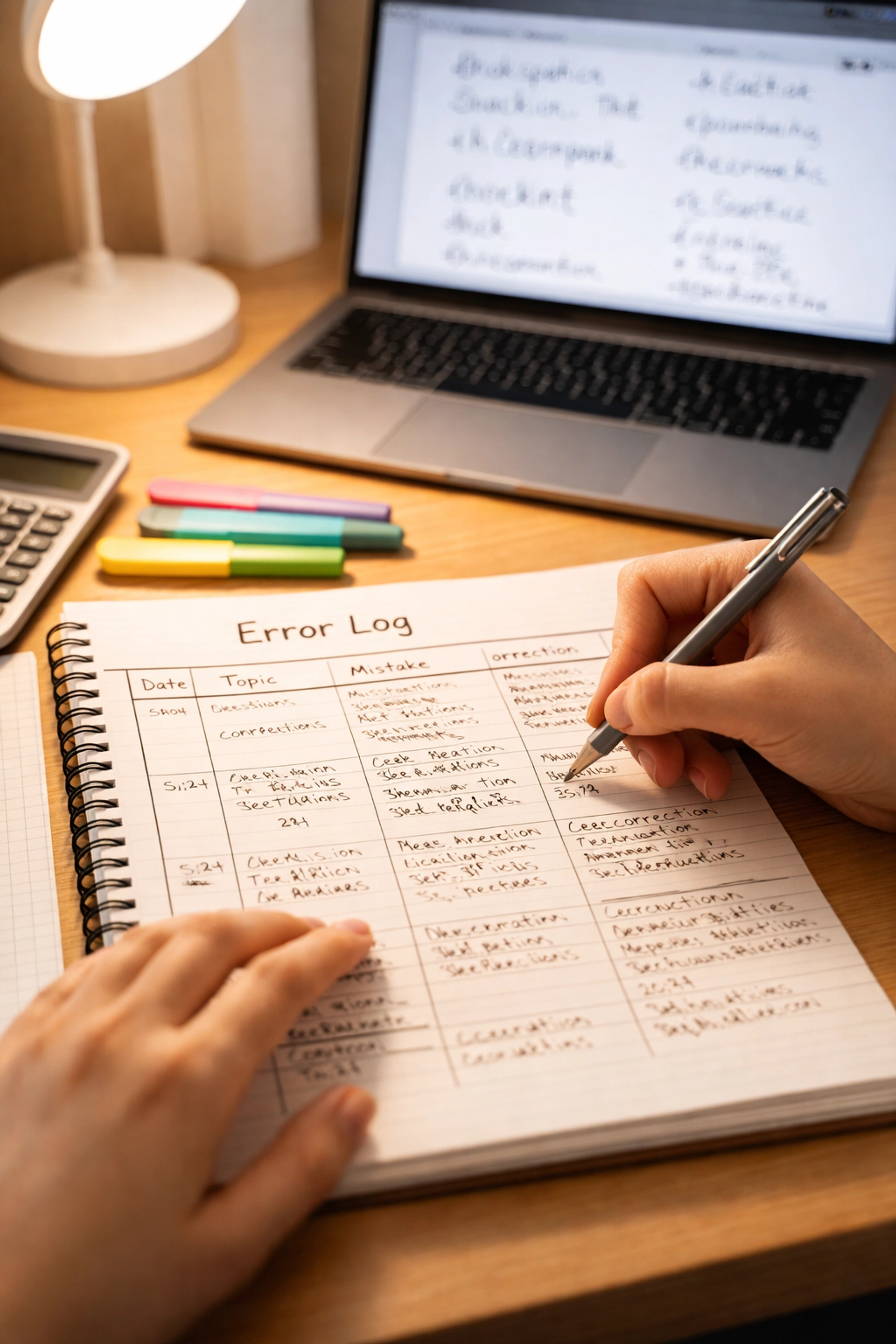
- Keep a detailed error log for every single mistake : note whether it was a knowledge gap, a reading error, or a time pressure issue
- Review your error log weekly to spot patterns
- Start timing yourself on individual sections
This is where the magic happens. Your score improvements during this phase can be dramatic if you stay focused.
Phase 3: Simulation (Final 2 Weeks)
Goal: Build stamina and perfect your timing.
You're almost there. Now it's about putting everything together under realistic conditions.
- Take 1-2 full-length official practice exams under strict timing
- Schedule these for Saturday mornings to match actual test day conditions
- Spend more time reviewing each test than you spent taking it
- Fine-tune your pacing strategy for each section
- Make sure your laptop has the updated Bluebook app installed
The review part is crucial. Don't just take practice tests and move on. Dig into every wrong answer and understand why you missed it.
Your Weekly Study Breakdown
Wondering what a typical study week looks like? Here's a realistic schedule that won't consume your entire life:
- 30 minutes : Lessons on your weak areas (videos, reading, tutoring)
- 15 minutes : Reviewing tested math concepts
- 15 minutes : Reviewing tested ELA concepts
- 10 minutes : Reviewing test-taking strategies
- 20-35 minutes : Reading & Writing practice sections
- 20-35 minutes : Math practice sections
- 25-30 minutes : Supplemental practice on that week's focus topic
That's roughly 2-3 hours per week of focused study time. Totally manageable alongside school, activities, and having an actual life.
Every 4-6 weeks, add a full practice test to check your progress.
Setting Realistic Score Goals
Before you start studying, you need a clear target. Here's how to set one:
- Take a diagnostic practice test in Bluebook to find your baseline
- Research your college list : most schools publish the middle 50% of admitted students' SAT scores
- Set an improvement goal based on your starting point
Use these benchmarks as a guide:
| Your Starting Score | Realistic Improvement Goal |
|---|---|
| 600-640 | +50 points |
| 650-690 | +40 points |
| 700-740 | +30 points |
| 750-790 | +10 points |
The higher your starting score, the harder additional points become. But every improvement is possible with the right approach.

The Resources You Actually Need
Here's a secret: you don't need 10 different prep books. Quality beats quantity every single time.
Prioritize these:
- College Board Bluebook App : Free and official
- College Board Official Question Bank : The closest thing to real test questions
- One high-quality third-party resource : Choose something data-backed with good reviews
That's it. Seriously. Jumping between too many resources creates confusion and wastes precious study time.
Your Future Self Will Thank You
Here's the vision we want you to hold onto: imagine walking out of your SAT testing center, knowing you gave it everything you had. Imagine opening that score report and seeing a number that opens doors to your dream schools.
That future is absolutely within your reach.
The Digital SAT rewards students who understand concepts deeply rather than memorizing surface-level facts. With a structured sat study plan, consistent effort, and the right study skills, you can achieve scores you never thought possible.
You've got this. And if you ever need extra support along the way, we're here to help.
Now go build your plan and start crushing it.