SAT Mastery Series: Reading Deep Dive – Command of Evidence (Module 22)
You know that sinking feeling when you read an SAT passage, think you understand it, then get to the "Which choice provides the best evidence..." question and suddenly doubt everything? Yeah, we've all been there. Command of Evidence questions are designed to test whether you actually understood what you read: or if you just skimmed and guessed.
Here's the thing: these questions aren't trying to trick you. They're actually giving you a roadmap to the right answer. You just need to know how to read that map.
Understanding Command of Evidence Questions
Command of Evidence questions are the SAT's way of asking: "Prove it." They typically appear in pairs. First, you'll answer a question about the passage: maybe about the author's purpose or a character's motivation. Then immediately after, you'll see a question asking you to identify which lines from the passage support your previous answer.
This question type tests your ability to locate and analyze specific textual evidence that justifies an answer or supports a claim. You're not just demonstrating comprehension: you're showing you can trace your reasoning back to the source material.
Think of it like being a lawyer. You can't just say "my client is innocent" and walk away. You need to present the evidence. The SAT wants you to be that thorough.
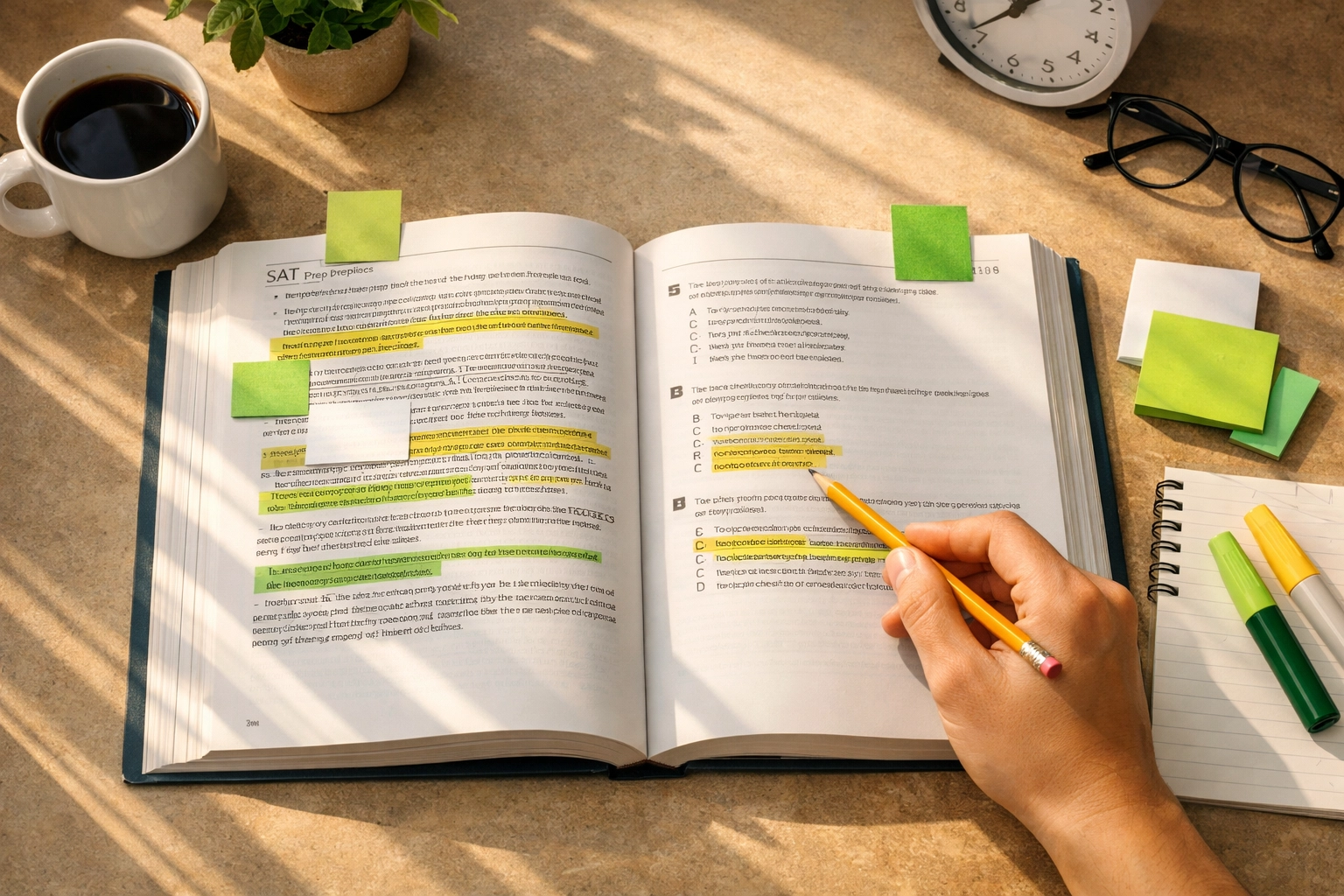
The "Anchor" Method: Your Secret Weapon
Here's where things get interesting. Most students tackle these question pairs in order: answer the first question, then hunt for evidence. But what if I told you there's a better way?
The Anchor Method flips the script. Instead of going first-to-second, you use the second question to help solve the first.
Here's how it works:
Step 1: Read both questions before looking at answer choices. Know what you're hunting for.
Step 2: Look at the line references in the evidence question (Question 2). These four options are your anchors: they're telling you exactly where the important information lives.
Step 3: Read each of those referenced lines carefully. Ask yourself: "What does this line actually prove or support?"
Step 4: Use what you learned from those lines to answer the first question.
Step 5: Match your answer from Question 1 back to its evidence in Question 2.
Why does this work? Because the SAT has already narrowed down the passage to four specific excerpts. Instead of rereading the entire passage, you're laser-focused on the sections that actually matter. It's like getting a cheat sheet for where to look.
Spotting the "Partial Evidence" Trap
Here's where students lose points: they choose evidence that sounds related but doesn't actually prove the claim.
Partial evidence is the SAT's favorite trap. It's a line that touches on the topic but doesn't fully support the answer. It's evidence that gets you 80% of the way there: but on the SAT, 80% equals wrong.
Let me show you what I mean. Imagine the first question asks: "What is the main reason the scientist pursued this research?"
Answer choice: "To find a cure for a specific disease."
Now you need evidence. Here are two options:
Option A: "The scientist dedicated her career to medical research, believing science could improve countless lives."
Option B: "After her daughter's diagnosis, the scientist focused exclusively on developing treatments for the disease."
Option A sounds nice. It's about research and helping people. But it's partial evidence: it's too general. Option B directly connects the scientist's motivation to the specific disease mentioned in the answer. That's your match.
The rule: Your evidence must support all parts of the answer choice, not just the general topic. If you're making logical leaps to connect them, you've fallen for the trap.
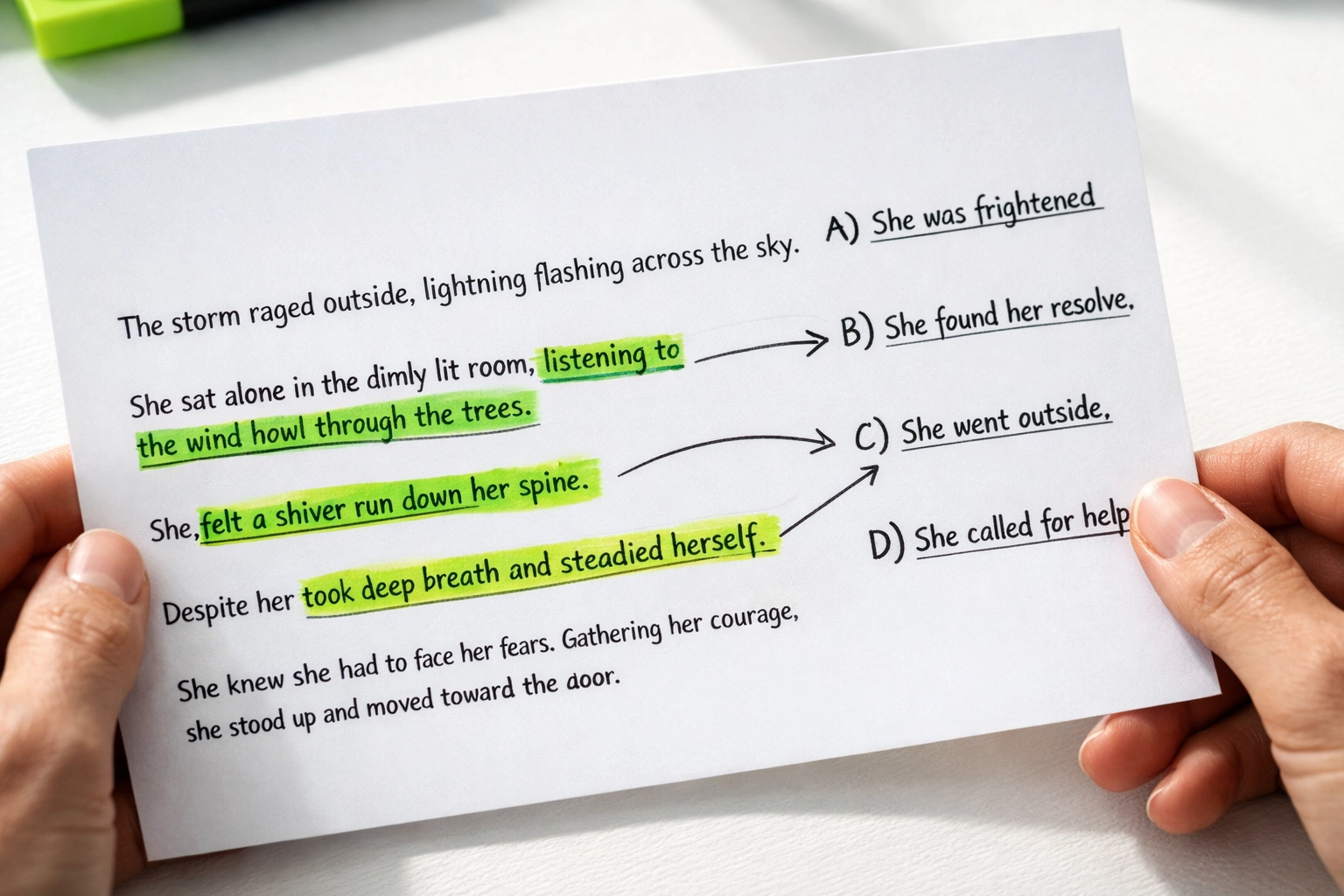
Breaking Down the Logic: Tutor Scripts That Walk You Through
Let's get into the heart of command of evidence practice: the detailed walkthrough that shows you exactly how to think through these questions. This is where you'll spend most of your practice time, and honestly, it's where the magic happens.
Example Walkthrough 1: Character Motivation
The Question: "The passage suggests that Elena's primary motivation for returning to her hometown was to..."
Your Process:
First, don't immediately jump to answer choices. Go straight to the evidence question below it. You'll see four line references. Read each one and annotate what it actually says:
- Lines 12-15 might discuss Elena's nostalgia for childhood
- Lines 23-26 might mention her deceased grandmother's house
- Lines 34-37 might describe her career opportunities in the city
- Lines 45-48 might reveal her need to settle her grandmother's estate
Now here's the critical thinking part: Which of these lines gives you the most direct reason for her return? Lines 12-15 show emotion but not action. Lines 34-37 are actually about staying away. Lines 23-26 and 45-48 both mention the grandmother: but one is emotional description, the other is a concrete obligation.
If the answer choice says "fulfill a family responsibility," you need lines 45-48. If it says "reconnect with her past," lines 12-15 or 23-26 work better: but you'd need to determine which is more complete evidence.
The Lesson: Direct beats indirect. Concrete beats abstract. Complete beats partial.
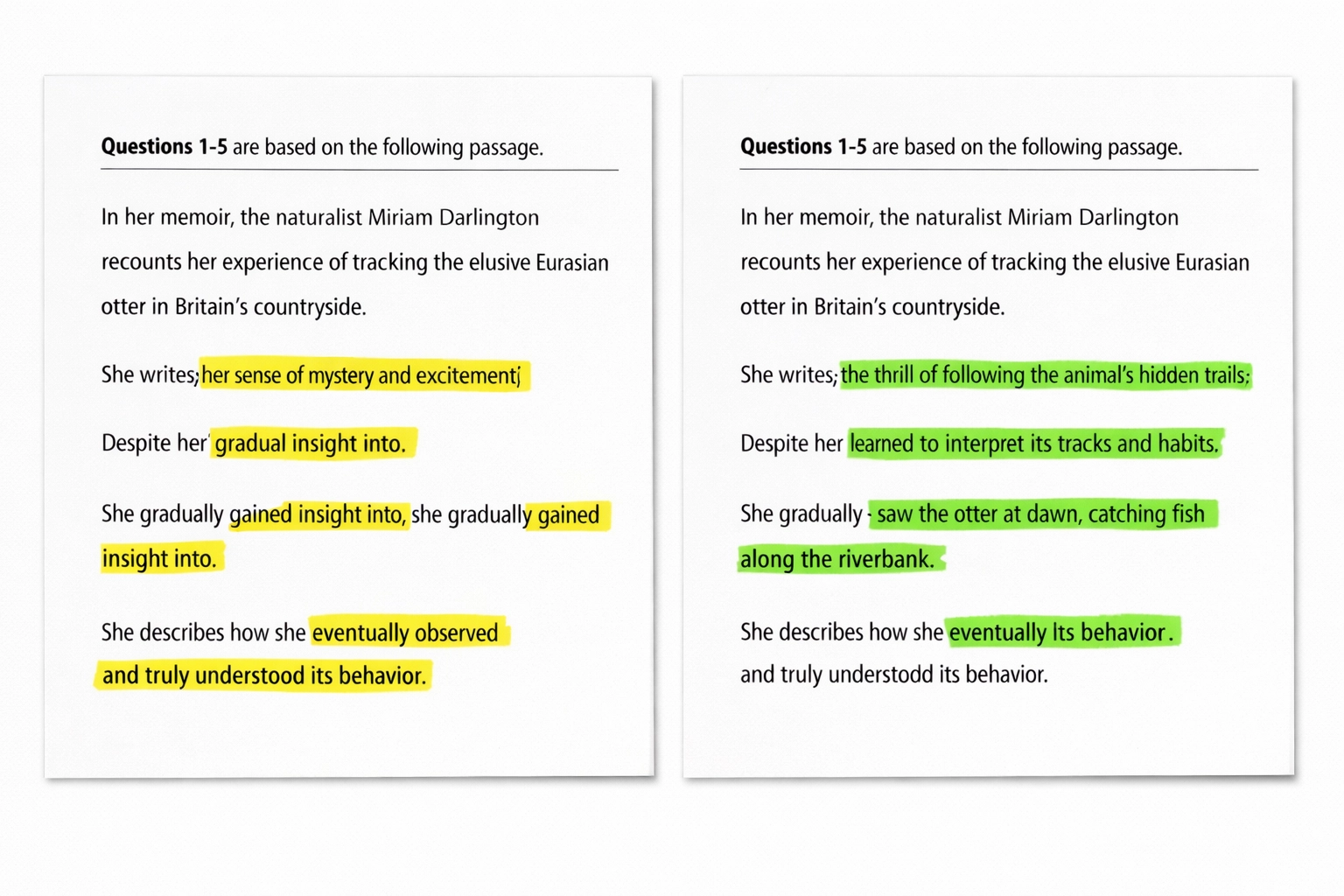
Example Walkthrough 2: Author's Purpose
The Question: "The author includes the statistics in paragraph 3 primarily to..."
The Evidence Options:
- Lines showing the statistics themselves
- Lines interpreting what those statistics mean
- Lines proposing solutions based on the data
- Lines introducing why the topic matters
This is where students often grab the first option: the actual statistics. But wait. The question asks why the author included them, not what they are.
You need to trace the author's reasoning. Read around those statistics. What comes right before? What follows? Usually, the author will tell you why the numbers matter. That interpretation: not the numbers themselves: is your evidence.
If the statistics show "60% of students reported anxiety" and the next line says "these numbers reveal an urgent need for mental health resources," that second part is your evidence for "to argue for increased support services."
The Lesson: Evidence for "why" questions is usually found in the author's commentary, not the raw information itself.
Example Walkthrough 3: The Subtle Distinction
Sometimes all four evidence choices seem plausible. You're down to two options, both feel right. This is where precision matters.
Let's say you're supporting the answer: "The scientist's discovery challenged conventional wisdom."
Option A: "Dr. Kim's findings contradicted previous studies, suggesting researchers had misunderstood the mechanism."
Option B: "Many scientists initially doubted Dr. Kim's conclusions, requesting additional verification."
Both mention disagreement with the scientific community. But which one proves the answer? Option A shows the discovery itself challenged convention: the findings contradicted prior work. Option B shows scientists were skeptical: that's a response to the discovery, not the discovery itself.
You're looking for evidence that directly proves the claim, not evidence that shows the aftermath or reaction.
The Lesson: Match the exact relationship stated in the answer choice. If the answer is about the discovery, find evidence about the discovery: not about people's reactions to it.
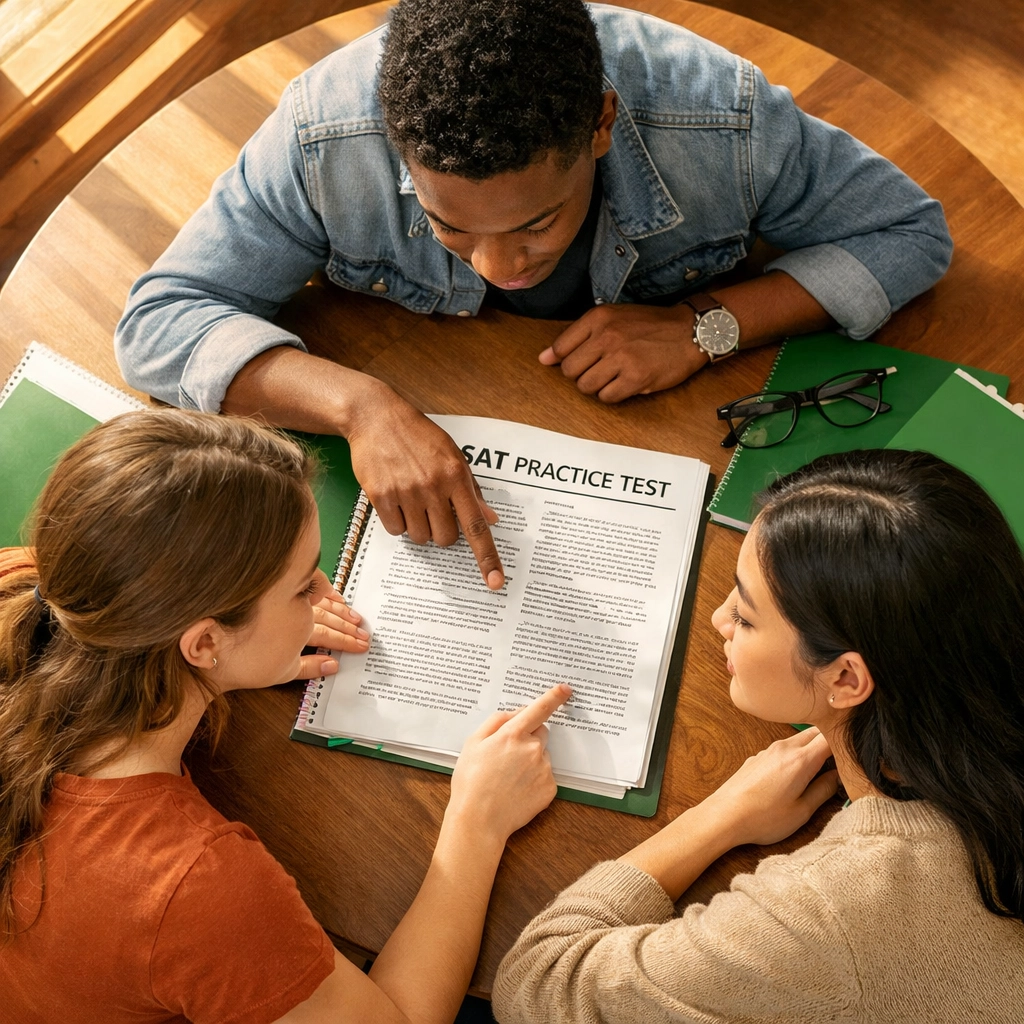
Your Practice Roadmap
Now that you understand the theory and strategy, you're ready for focused practice. This module includes 8-10 high-quality SAT reading passages with paired Command of Evidence questions. Each one is designed to challenge different aspects of evidence-matching:
- Distinguishing between main point and supporting detail evidence
- Avoiding partially-correct line references
- Working backward from evidence to answer
- Identifying when evidence is too general or too specific
As you work through each question pair, use the Anchor Method. Don't rush. Take time with the explanations: they're 70% of this module because that's where the real learning happens. You'll see detailed tutor scripts for every question that walk you through the logical process of elimination and selection.
The Bigger Picture
Mastering command of evidence questions doesn't just improve your SAT reading score (though it definitely does that). You're developing a critical skill: the ability to support your ideas with concrete proof. That's essential for college essays, research papers, and honestly, any time you need to make a convincing argument.
The SAT isn't just testing whether you have opinions about what you read: it's testing whether you can defend those opinions with evidence. That's the difference between a guess and an answer you can stand behind.
Every time you match an answer to its textual support, you're training your brain to read more carefully, think more critically, and argue more effectively. These paired questions are teaching you to be rigorous in your thinking: and that skill stays with you long after test day.
Ready to dive into the practice questions? Remember: slow down, use the Anchor Method, and don't settle for "close enough." On the SAT, precision wins.
The evidence is right there in the passage. You just need to trust yourself to find it.